.png)

Free and Low-Cost Wellness Practices That Actually Work (No Gym, No Therapist, No Problem)
- The Jan Brand

- Jun 12
- 10 min read
Scroll through wellness content for about ten minutes and you will start to feel like taking care of yourself requires a significant financial investment. Luxury retreats. Private trainers. High-end supplements. Weekly therapy at $200 a session. Expensive workout studios. A refrigerator full of organic produce.
And if you cannot afford all of that? The implication is that real wellness is just not available to you right now.
That is simply not true. And the research backs that up.
Some of the most effective wellness practices in existence cost absolutely nothing. The habits that produce the biggest improvements in how women feel physically, mentally, and emotionally are almost entirely free. The wellness industry has done an impressive job of obscuring that fact, but it remains true.
If you want to feel better and your budget is tight, or you just refuse to spend a fortune on something that should be accessible to everyone, this guide is for you.
THE WELLNESS INDUSTRY HAS MADE WELLNESS FEEL MORE EXPENSIVE THAN IT IS
Before we get into the habits, it is worth naming something directly: wellness has become heavily commercialized in a way that conflates spending money with taking care of yourself.
Supplements, gadgets, memberships, luxury retreats, apps, courses, and high-end skincare lines are not inherently bad. Some of them are genuinely useful. But none of them are requirements for wellbeing. They are optional additions to a foundation that does not cost anything.
The American Psychological Association has repeatedly found in its annual stress surveys that lower-income individuals report higher stress levels not because inexpensive wellness tools do not work, but because they have been told those tools are insufficient. The message that you need expensive solutions is itself a source of stress and shame for women who are already stretched thin.
The truth is straightforward: your wellness journey does not have to look expensive to be effective. It just has to be consistent.
WHAT ACTUALLY MOVES THE NEEDLE ON YOUR WELLBEING
Here is a useful way to think about this. When researchers study what produces the most significant improvements in physical health, mental health, and overall quality of life, the same core factors show up over and over again: sleep, movement, stress management, meaningful connection with other people, nutrition, and mindset.
None of those things inherently cost money. And none of them require professional services to improve, at least not at the foundational level. You can build meaningful progress in every single one of these areas with habits that are free and available to you right now.
10 FREE AND LOW-COST WELLNESS PRACTICES THAT ACTUALLY WORK
PRACTICE 1: WALKING
Walking is the most underrated wellness tool available to virtually everyone. It is free, requires no equipment, and the research supporting it is extraordinary.
A study published in JAMA Internal Medicine found that people who walked at least 150 minutes per week, which is about 22 minutes per day, had significantly lower rates of depression, cardiovascular disease, and early mortality. Research from Stanford University found that walking, specifically walking in nature, reduced rumination and negative self-focused thinking by measurable amounts. A separate study found that walking boosts creative thinking by up to 81 percent compared to sitting.
Start with ten minutes. Build to twenty or thirty. That is enough to produce real, documented benefits for your mood, energy, stress levels, and long-term health.
PRACTICE 2: BREATHWORK
Your breath is the only part of your autonomic nervous system you can directly control, and that gives it remarkable power to shift your mental and physical state almost instantly.
Research from the University of Arizona confirmed that slow, controlled breathing with an extended exhale activates the parasympathetic nervous system, bringing down heart rate, reducing cortisol, and creating a measurable calm within minutes. Box breathing, the 4-7-8 technique, and simple slow exhale breathing all work and all cost nothing.
RELATED POST: How to Use Breathwork to Calm Anxiety in 5 Minutes or Less
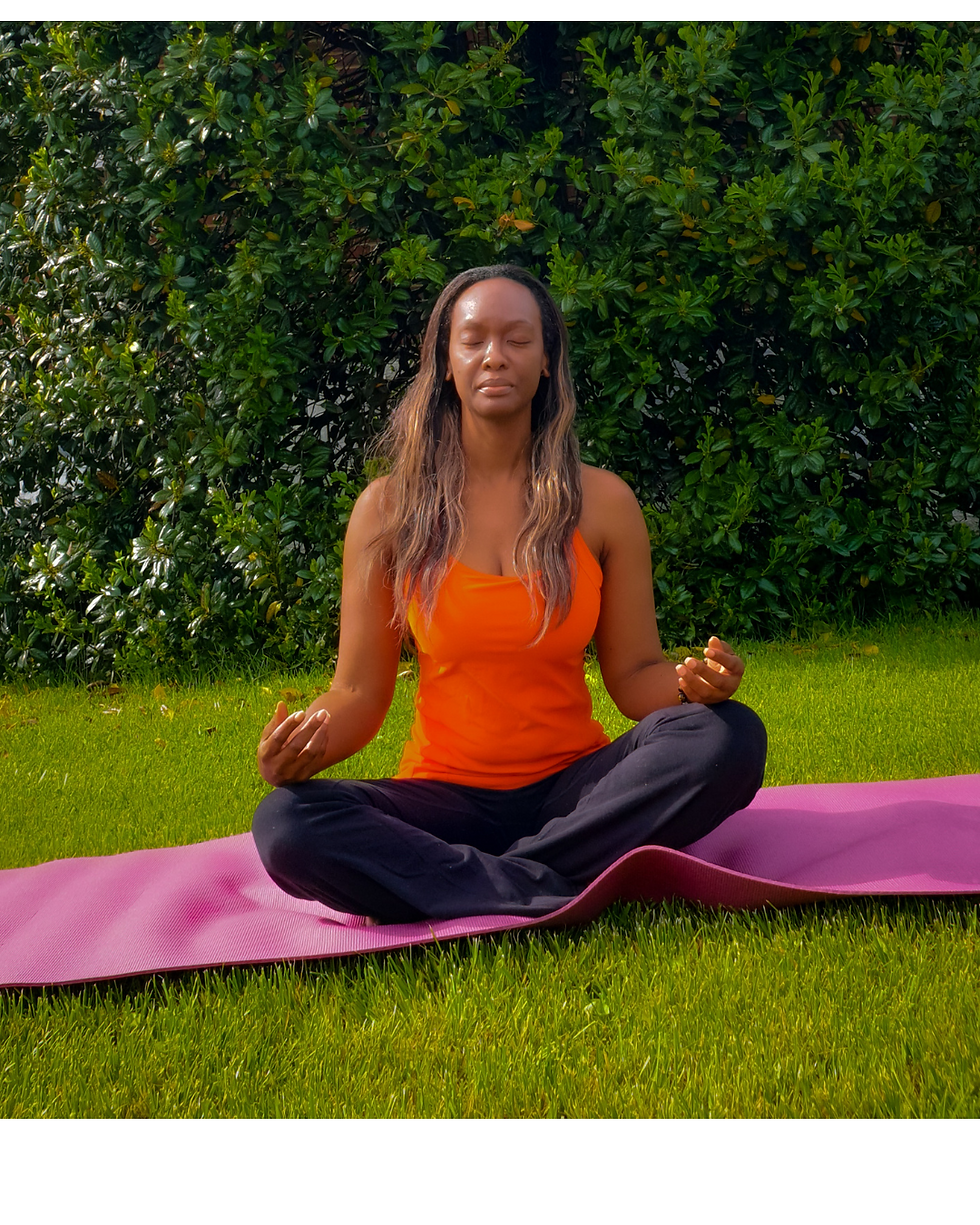
PRACTICE 3: MEDITATION
Five to ten minutes of daily meditation produces benefits that extend far beyond stress relief. Research from Harvard Medical School found that regular meditation practice actually changes the physical structure of the brain, increasing gray matter density in regions associated with self-awareness, compassion, and attention.
You do not need to pay for an app or a course. YouTube and the free version of Balance have more meditation content than you could ever use. The practice itself is free. The only investment is time.
PRACTICE 4: JOURNALING
Writing down your thoughts and feelings creates a form of mental and emotional processing that most other wellness practices cannot replicate.
Research from the University of Texas found that people who journaled for just 15 to 20 minutes a few times per week showed significant reductions in anxiety, improved emotional clarity, and even fewer stress-related health complaints over time. A notebook and a pen are all you need.
Try one of these prompts to get started: What is sitting heaviest on my mind right now? What went well today? What do I need that I am not currently giving myself?
PRACTICE 5: STRETCHING AND MOBILITY WORK
Physical tension and emotional tension are directly connected. When your body is tight, your nervous system stays on alert. When you release physical tension, you release emotional tension along with it.
Research published in the Journal of Bodywork and Movement Therapies found that regular stretching reduces muscle tension, lowers cortisol, improves range of motion, and produces measurable improvements in mood and anxiety levels. You can find free stretch routines on YouTube, or simply move intuitively for ten minutes, targeting wherever your body feels tight.
RELATED POST: Unlocking the Fountain of Youth: 5 Surprising Ways to Stay Mobile and Limber as You Age
PRACTICE 6: CREATING SCREEN-FREE TIME
Your phone is not neutral. It is actively stimulating your nervous system and consuming your mental bandwidth every time you pick it up.
Research from the University of British Columbia found that people who checked their phones less frequently throughout the day reported significantly lower stress and higher wellbeing. A study published in the Journal of Social and Clinical Psychology found that limiting social media use to 30 minutes per day led to meaningful reductions in loneliness and depression after just three weeks.
Screen-free time does not mean giving up your phone. It means choosing windows of the day when it does not run the show. Before bed. During meals. The first fifteen minutes of your morning. Start small and notice what shifts.
PRACTICE 7: SPENDING TIME OUTDOORS
Even ten minutes outside changes your body chemistry in ways that benefit your mood, stress levels, and cognitive function.
Research published in Environmental Health and Preventive Medicine found that spending time in natural settings reduces cortisol by a meaningful amount compared to staying indoors. A study from the University of Michigan found that time in nature improves memory, attention, and emotional regulation. A separate study found that just two hours per week in natural environments significantly boosted overall wellbeing.
You do not need a hiking trail. A backyard, a park bench, or a walk around the block counts.
PRACTICE 8: DRINKING MORE WATER
This one is almost embarrassingly simple and still makes the list because chronic mild dehydration is genuinely common and genuinely costly to your mental and physical health.
Research published in the Journal of Nutrition found that even mild dehydration, meaning a fluid loss of just 1.5 percent, impaired mood, concentration, and energy in women during daily activity. Drinking water is free from most taps and addressing dehydration can produce noticeable improvements in how you feel within hours.
A practical starting point: drink a full glass of water before your first cup of coffee every single morning.
PRACTICE 9: DECLUTTERING ONE SMALL SPACE
Research from Princeton University found that visual clutter competes for your brain's attention and keeps your nervous system in a low-level state of alert. Research from UCLA confirmed that cluttered home environments are associated with elevated cortisol throughout the day.
You do not need to overhaul your entire home. Clear one surface. Tidy one drawer. Wipe down one countertop. That small act of creating order sends your brain a signal of calm that is disproportionate to the effort it took.
PRACTICE 10: MEANINGFUL CONNECTION
Research from Brigham Young University, drawing on data from over 300,000 people, found that adequate social connection reduces the risk of early death by 50 percent and is a stronger predictor of wellbeing than many physical health factors. A study from Harvard's landmark 80-year study on adult development found that close relationships were the single strongest predictor of health and happiness in later life.
Call a friend. Text someone you have been meaning to reach out to. Be honest with someone you trust about how you are actually doing. Connection does not require money. It requires vulnerability and a little time.
WHY SIMPLE WELLNESS PRACTICES OFTEN OUTPERFORM EXPENSIVE ONES
Here is the thing about expensive wellness purchases: they often fail not because they are bad, but because they are not used consistently.
The gym membership that gets used three times and forgotten. The fitness equipment that becomes a clothing rack. The wellness apps that are downloaded and never opened. The supplements taken for a week and then pushed to the back of the cabinet.
Research on habit formation is very clear that ease of access is one of the strongest predictors of whether a habit sticks. The more steps between you and the behavior, the less likely you are to do it. Free, simple habits that require nothing but showing up are the ones that get done consistently. And consistency is what produces results.
The best wellness practice is always the one you will actually do.
BUILDING YOUR OWN AFFORDABLE WELLNESS ROUTINE
If you want to turn this list into something actionable, here is a simple formula. Choose one habit for your body, one for your mind, and one for your stress levels.
For your body: a fifteen-minute walk each day.
For your mind: five minutes of journaling each morning or evening.
For your stress: one breathwork practice when you feel tension building.
That is a complete wellness routine. It takes under thirty minutes total and costs nothing. Build from there once those three habits feel natural.
WHAT TO DO WHEN YOU CANNOT AFFORD PROFESSIONAL SERVICES
Sometimes therapy, coaching, or professional wellness programs would genuinely help and are simply not financially accessible. That is a real and frustrating situation, and it deserves honest acknowledgment.
You can still make meaningful progress. Daily habits, free community support groups, peer connection, and the practices in this post can carry you a long way. This is not about replacing professional help when it is needed. It is about making wellness accessible right now, in your current reality, with what you already have.
If and when professional support becomes available to you, it will build on the foundation you have already created. And that foundation is worth building regardless.
THE FIVE WELLNESS HABITS WITH THE HIGHEST RETURN ON INVESTMENT
If you are starting from scratch and want to know where to put your energy first, research consistently points to these five as producing the biggest improvements for the least investment:
Sleep. Everything else works better when you are rested.
Walking. The physical and mental health benefits are extraordinary and it costs nothing.
Breathwork. The fastest way to shift your state available to you at any moment.
Meditation. Changes your brain and your baseline over time in ways nothing else replicates.
Meaningful relationships. The single most consistent predictor of long-term health and happiness in the research.
All five are free. All five are accessible. All five work.
RELATED POST: The Busy Woman's Complete Guide to Mindset and Wellness
FAQ
Q: Can free wellness practices really work as well as paid programs?
A: For the foundational habits that produce the most significant wellbeing improvements, yes. The research on walking, sleep, breathwork, journaling, and social connection is as strong as or stronger than the research behind most paid wellness programs. What paid programs sometimes offer is structure, accountability, and community, but those benefits can also be found for free through online communities, accountability partners, and consistent personal routines.
Q: I have tried these things before and they did not work for me. What am I doing wrong?
A: Consistency is almost always the missing piece. A single journaling session or one walk does not produce lasting change. Neither does a week of good habits followed by two weeks off. The benefits of these practices are cumulative and compound over time. If something felt useless, it is worth asking how consistently and for how long you actually tried it before concluding it did not work.
Q: How do I stay motivated to keep up free wellness habits when there is no financial investment keeping me accountable?
A: Tie the habits to an existing routine so they get pulled along automatically rather than requiring a fresh decision each day. Journal right after your morning coffee. Walk right after you drop the kids off. Stretch right before bed. Environmental design works better than motivation for sustaining habits over time.
Q: Is there anything free wellness practices cannot address?
A: Yes, and it is important to be honest about this. Serious mental health conditions, chronic illness, significant trauma, and complex medical situations often genuinely require professional support. Free wellness habits are powerful tools for maintaining and improving general wellbeing, but they are not substitutes for professional care when that care is truly needed.
Q: Where is the best place to start if I am completely overwhelmed and do not know which habit to pick?
A: Start with water and a ten-minute walk. Both are genuinely low effort, immediately beneficial, and build a small sense of momentum that makes the next habit easier to add. Overwhelm shrinks fastest when you take one very small action rather than trying to figure out the perfect plan.
CLOSING
You do not need a wellness budget the size of a mortgage payment. You do not need the latest supplement, the premium membership, or the luxury ritual.
You need a handful of habits that support your mind, your body, and your nervous system. Done consistently. With what you already have.
Wellness is not something you earn when you can finally afford it. It is something you build, one small free habit at a time, starting right now.


Comments