.png)

10 Completely Free Self-Care Rituals That Genuinely Restore Your Energy
- The Jan Brand

- Apr 3, 2025
- 8 min read
Updated: Jun 10
Can we talk about the self-care myth for a second? Somewhere along the way, the wellness industry convinced us that taking care of ourselves means buying things. Face masks, supplements, expensive classes, fancy journals with gold lettering. And if you cannot afford those things, you must not really be prioritizing yourself.
That is such nonsense.
The truth is that the most effective self-care practices do not cost a single dollar. They are things you can do right now, in your own home, with nothing more than your body, your breath, and a little bit of intention. And they work. Not because someone is selling them to you, but because the research is actually behind them.
Here are ten completely free self-care rituals that genuinely restore your energy. Not just feel-good fluff. Real practices with real results.
1. TAKE A WALK OUTSIDE
This one is so simple it is easy to dismiss. Do not dismiss it.
Spending time outdoors, even just 20 minutes, produces measurable changes in your body and brain. A study published in the International Journal of Environmental Research and Public Health found that walking in nature reduces cortisol levels by up to 30 percent compared to walking in an urban environment. Another study from the University of Michigan found that spending time in natural settings improves memory and attention by as much as 20 percent.
You do not need a trail or a forest. A neighborhood walk counts. A park bench counts. The goal is fresh air, natural light, and a break from the indoor environment your nervous system has been sitting in all day. Even ten minutes makes a difference.
2. JOURNAL FOR JUST TEN MINUTES
Journaling gets talked about all the time in wellness spaces, but here is why it actually belongs on this list: the research is genuinely impressive.
A landmark study from the University of Texas found that people who engaged in expressive writing for just 15 to 20 minutes a few times per week showed significant improvements in emotional wellbeing, reduced anxiety, and even fewer doctor visits over the following months. Getting your thoughts out of your head and onto paper does something that thinking alone cannot do. It creates distance between you and your worries. It helps you process what is happening instead of just spinning in it.
You do not need a beautiful journal or a specific format. A plain notebook works perfectly. Try writing about three things that went well today, what is weighing on you right now, or what you need more of this week. Start there.
3. PRACTICE SLOW BREATHING FOR FIVE MINUTES
This is genuinely one of the fastest ways to shift how you feel, and it requires nothing but your own lungs.
When you slow your exhale down, specifically making it longer than your inhale, you activate your parasympathetic nervous system. That is the part of your nervous system responsible for the calm-down response. Research from the University of California confirmed that exhale-focused breathing techniques reduce anxiety and lower heart rate within minutes.
Try this: inhale for four counts, hold for four, exhale for six. Repeat for five minutes. It feels almost too easy, but the physiological effect is real. Your body is designed to respond to this. You are just giving it the signal it needs.
RELATED POST: When Everything Feels Like Too Much: A 10-Minute Reset Routine for Overwhelmed Women
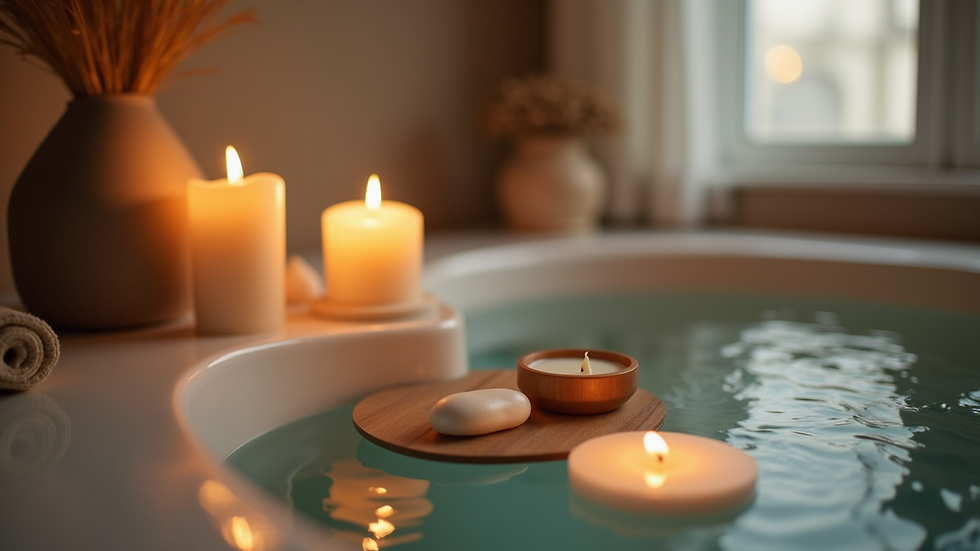
4. CREATE A DIY SPA MOMENT AT HOME
This does not require candles, bath bombs, or anything you do not already have. It just requires giving yourself permission to do something purely for comfort.
Run a warm bath or a hot shower and actually stay in it longer than you usually do. Put on music you love. Close the bathroom door. Soak in silence or in whatever sounds make you feel calm.
Research published in the journal Complementary Therapies in Medicine found that warm water immersion reduces muscle tension, lowers blood pressure, and activates the parasympathetic nervous system, the same calm-down system triggered by slow breathing. Your body responds to warmth as a signal of safety and relaxation. Use that.
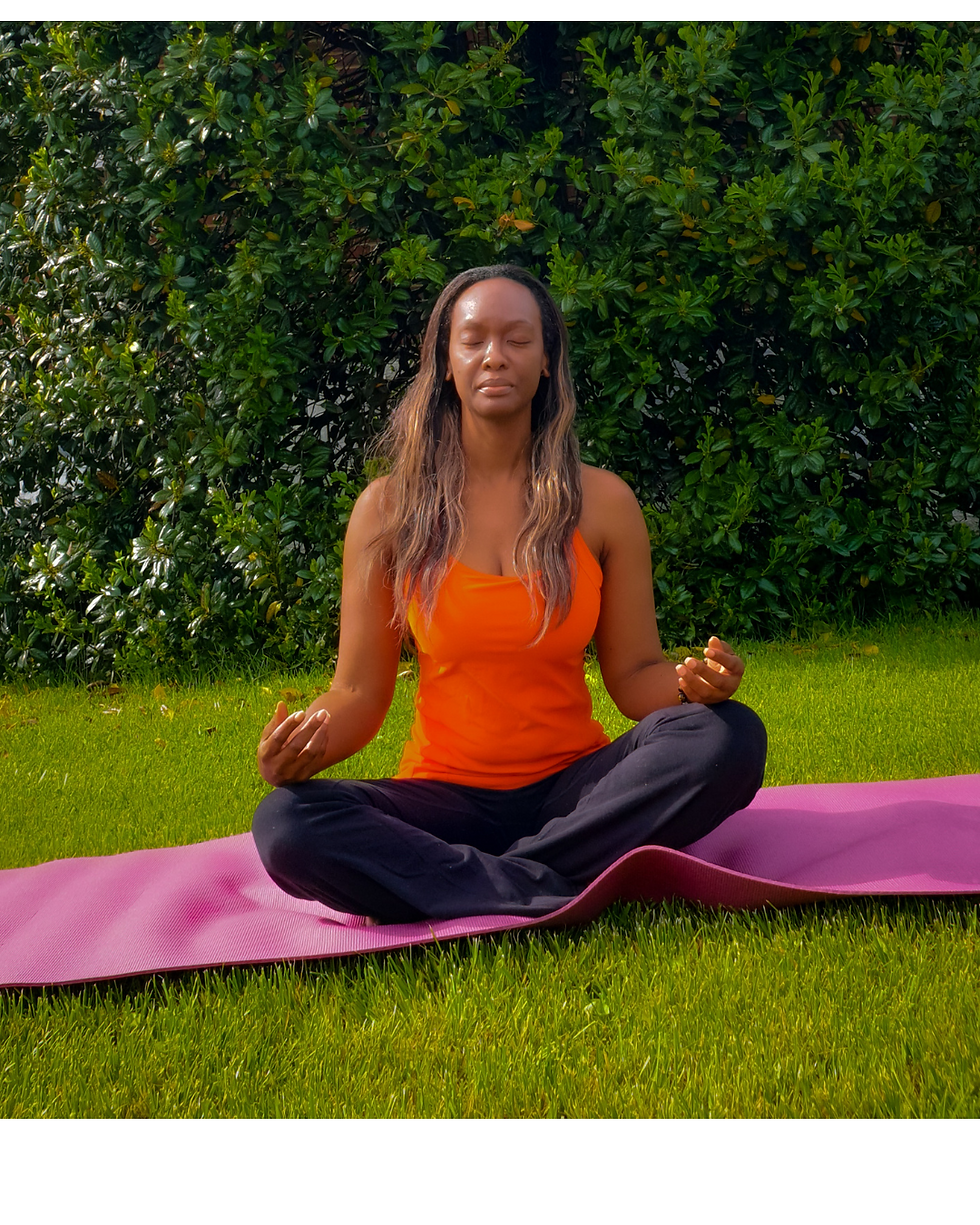
5. STRETCH OR DO GENTLE YOGA
You do not need a gym membership or a yoga class to get the benefits of stretching. You just need a few minutes of floor space.
Physical tension is one of the most common ways stress shows up in the body, and most people carry it constantly without realizing it. Research shows that regular stretching reduces muscle tightness and has a direct effect on mood and anxiety levels. A study from Harvard Medical School found that yoga and gentle movement lower cortisol, reduce symptoms of depression and anxiety, and improve sleep quality.
Pull up a free video on YouTube, or just move intuitively. Stretch your neck, roll your shoulders, reach for the floor. Let your body tell you where it is holding tension and give it some relief.
6. VOLUNTEER YOUR TIME
This one might seem like it is more about other people than about you, but the research says otherwise.
A study from the London School of Economics found that people who volunteer regularly are significantly happier than those who do not. Another study published in the journal BMC Public Health found that volunteering is associated with lower rates of depression and a greater sense of purpose and life satisfaction.
When you give your time and energy to something beyond your own worries, it creates perspective. It also triggers the release of oxytocin and dopamine, the same feel-good chemicals associated with connection and reward. Check out a local food bank, community garden, animal shelter, or neighborhood cleanup. Even a few hours a month can have a lasting effect on your mental state.
7. WRITE A GRATITUDE LIST
Gratitude practice has more evidence behind it than most people realize. It is not just a positive thinking exercise. It is a genuine neurological intervention.
Research from UCLA found that expressing gratitude activates the medial prefrontal cortex, the part of the brain associated with reward and interpersonal bonding. A study published in the Journal of Positive Psychology found that people who wrote down three good things that happened each day for one week reported significantly higher levels of happiness that lasted for up to six months.
Every morning or evening, write down three specific things you are grateful for. Not vague things like "my health." Specific things like "the conversation I had with my friend today" or "the fact that I got through that hard meeting." Specificity makes the practice more effective because it forces your brain to actually search for and notice good things rather than defaulting to what is going wrong.
8. DO A DIGITAL DETOX
Even a short one counts.
A study from the University of British Columbia found that people who checked their phones less frequently throughout the day reported significantly lower stress levels and higher wellbeing scores than those who checked constantly. Another study published in the Journal of Social and Clinical Psychology found that limiting social media use to 30 minutes per day led to significant reductions in loneliness and depression after just three weeks.
You do not have to go off the grid. Try putting your phone in another room for two hours in the evening. Keep it out of the bedroom at night. Take one full day away from social media on the weekend. Notice how different your mind feels when it is not constantly being pulled into a screen.
9. DANCE IN YOUR KITCHEN
Do not skip this one because it sounds silly. That is exactly the point.
Dancing releases endorphins and suppresses cortisol, the two biggest players in your stress response. A study published in the journal Psychology of Music found that dancing reduces cortisol levels by up to 25 percent. Research also found that the combination of music and movement produces a dopamine release that is more significant than either one alone.
You do not need moves. You do not need a class. Put on one song you genuinely love, turn it up, and let yourself move however feels good. Five minutes of this can completely shift your energy in a way that is hard to explain until you actually try it.
RELATED POST: 5 Surprising Ways to Chill Out and Lower Stress (No Meditation Required!)
10. PRACTICE SMALL ACTS OF KINDNESS
This last one might surprise you but it belongs here. Being kind to other people is genuinely good for your own mental health.
A study from the University of British Columbia found that people who performed acts of kindness reported feeling significantly happier than those who did not, and the effect was consistent across different types of kind acts. Research also shows that kindness triggers oxytocin release, reduces social anxiety, and creates a feedback loop of positive emotion.
This does not have to be grand. Text someone to tell them you are thinking of them. Let someone go ahead of you in line. Leave a genuinely nice comment on a post. Bring a coworker a coffee. Small gestures, real impact, on both sides.
FAQ
Q: How do I make time for self-care when I am genuinely busy?
A: Most of the rituals on this list take ten minutes or less. The goal is not to carve out a big block of time. It is to weave small intentional moments into what you are already doing. A gratitude list takes three minutes. Slow breathing takes five. A dance break takes one song. You have more room than you think.
Q: Do these actually work or are they just nice ideas?
A: Every ritual on this list has research behind it from credible institutions. These are not just wellness trends. Walking, journaling, breathwork, movement, gratitude, and social connection all have documented effects on cortisol, mood, anxiety, and overall wellbeing. They work because they address real biological and psychological needs.
Q: Which one should I start with?
A: Start with whatever sounds most appealing right now. That is the one you are most likely to actually do. If nothing jumps out, start with the gratitude list because it is the lowest barrier and has some of the most consistent research behind it for rapid mood improvement.
Q: Can I do more than one of these in a day?
A: Absolutely. In fact, combining a few of them amplifies the effect. A walk outside plus slow breathing plus a few minutes of stretching covers multiple stress response systems at once and takes about 20 minutes total.
Q: What if I start and then stop the habit? Is it too late to start again?
A: No. Habits are not all or nothing. Missing a day or even a week does not erase the benefit of what you did before. Just start again. Research on habit formation shows that picking up a paused habit is significantly easier than building a new one from scratch.
CLOSING
Self-care is not about having the right products or the perfect routine. It is about consistently doing small things that remind your body and mind that they matter. That you matter.
You already have everything you need to start. Pick one thing from this list and do it today. Not perfectly. Not for a long time. Just once, intentionally, for yourself.
That is enough to begin.
RELATED POST: Reclaim Your Peace: Simple and Affordable Ways to Reset and Recharge for a Busy Week
RELATED POST: How Decluttering Your Space Can Calm Your Nervous System (And Where to Start)




Comments